
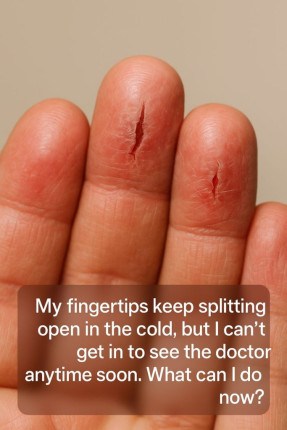
Wear Gloves: When going outside, wear warm gloves or mittens to protect your hands from the cold and wind. Make sure the gloves are breathable to avoid trapping moisture inside.
Use Gloves While Cleaning: If you’re doing household chores, especially washing dishes or using cleaning products, wear rubber gloves to avoid further drying out your skin.
4. Use Healing Ointments
Petroleum Jelly: Applying petroleum jelly (like Vaseline) directly onto the cracked skin can help to lock in moisture and promote healing. You can also use products like Aquaphor or Neosporin to prevent infection and speed up recovery.
Aloe Vera: If you have aloe vera gel, it can be soothing on the skin and may help with healing, especially if the skin is irritated or inflamed.
5. Stay Hydrated
Drink Water: Make sure you’re drinking enough water throughout the day. Dehydration can make your skin dry and more prone to cracking, so stay hydrated for better skin health.
Humidify Your Home: If the air in your home is dry (which is common during the winter months), use a humidifier to add moisture to the air. This can help keep your skin from becoming overly dry.
6. Avoid Picking at the Cracks
As tempting as it may be, avoid picking at or tearing open the skin if it’s already split. This can lead to infection or scarring and will only slow down the healing process.
7. Natural Remedies for Extra Relief
Coconut Oil: If you have some, coconut oil is a natural moisturizer that can soothe dry, cracked skin and help with healing. It also has anti-inflammatory properties that can reduce irritation.
Honey: If the cracks are deep and painful, applying raw honey can help. Honey is a natural antibacterial agent and will keep the skin moist while promoting healing.
8. Consider Vitamin Supplements
Omega-3 Fatty Acids: Taking omega-3 supplements (like fish oil) or eating foods rich in omega-3s (like salmon or flaxseeds) can improve skin hydration from the inside out.
Vitamin E: You can apply Vitamin E oil directly to cracked skin, as it helps to promote healing and reduce scarring.
When to Seek Medical Help
If you notice signs of infection, such as increased redness, swelling, pus, or warmth around the cracks, or if the pain becomes unbearable, it’s important to seek medical attention. Additionally, if the problem persists despite home remedies, a healthcare provider can help assess whether you need prescription-strength ointments or treatments.
Final Tips
- Avoid Direct Exposure to Cold: Limit exposure to the cold, and wear gloves even when you’re inside if your hands are already cracked.
- Be Consistent: Regular moisturizing and care will help prevent further cracking and keep your hands healthy in the long run.
I hope these tips help soothe your fingertips and promote healing. Let me know if you need more advice or if you’d like additional information!
