
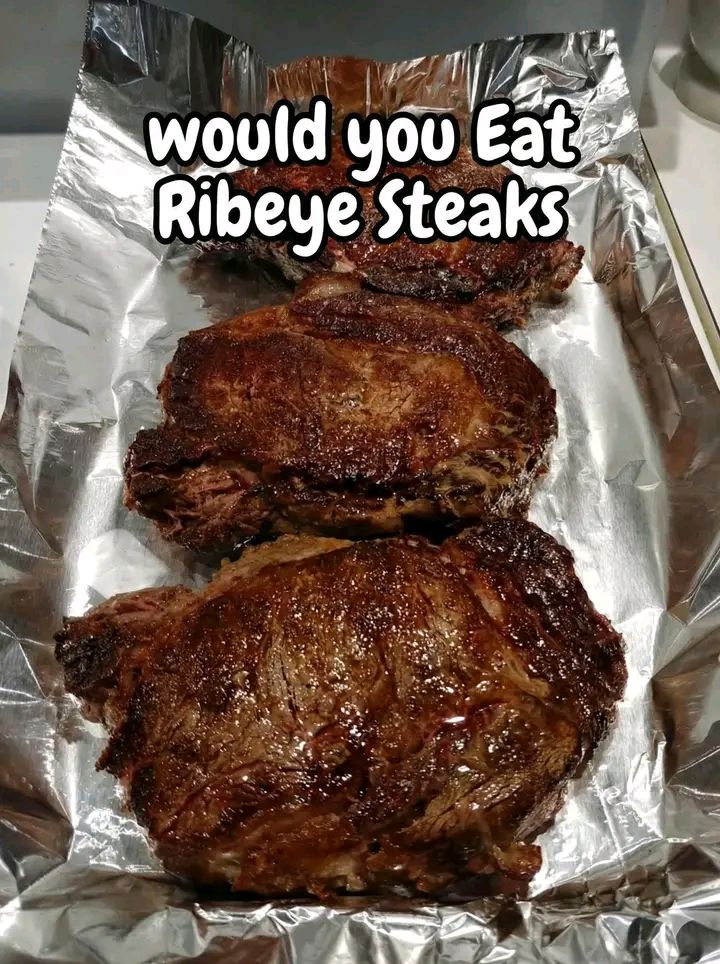
Cooking a ribeye steak is a disciplined process that rewards attention to detail. Following these steps carefully ensures a balanced crust, juicy interior, and well-developed flavor.
- Bring to room temperature: Remove the steak from refrigeration 30–45 minutes before cooking. This promotes even cooking.
- Season generously: Pat the steak dry with paper towels. Season both sides liberally with kosher salt and black pepper.
- Preheat the cooking surface: Use a heavy cast-iron skillet or grill. Heat until very hot, just before smoking.
- Add oil: Lightly coat the surface with high-smoke-point oil.
- Sear the steak: Place the steak in the pan and do not move it for 2–3 minutes, allowing a crust to form.
- Flip and baste: Turn the steak, add butter, garlic, and herbs. Tilt the pan and spoon melted butter over the steak repeatedly.
- Check internal temperature: Use a thermometer. Aim for 125°F (52°C) for rare, 130–135°F (54–57°C) for medium-rare.
- Rest the steak: Remove from heat and let rest for 5–10 minutes before slicing.
These steps represent the foundational “regulations” of ribeye preparation—simple, precise, and repeatable.
Serving and Storage:
Serving a ribeye steak is about respecting the effort invested in its preparation. Always slice against the grain to maximize tenderness. Serve whole or pre-sliced, depending on presentation style.
Classic accompaniments include roasted vegetables, mashed potatoes, or a simple green salad. Sauces, if used, should be minimal—such as herb butter or a light pan sauce.
For storage, allow leftovers to cool completely before placing them in an airtight container. Refrigerate for up to three days. When reheating, use gentle heat to avoid overcooking, or slice thin and serve cold in salads or sandwiches.
Tips:
Understanding subtle techniques can elevate your ribeye steak from good to exceptional.
- Dry-brine the steak by salting it several hours in advance for deeper seasoning.
- Use a thermometer instead of guessing doneness.
- Avoid overcrowding the pan, which lowers heat and prevents proper searing.
- Let the steak rest; cutting too early releases valuable juices.
These small considerations form a practical framework for consistent success.
Variations:
While traditional preparation highlights the ribeye’s natural qualities, variations allow for creative expression.
- Grilled ribeye: Cook over high direct heat, finishing with indirect heat for thicker cuts.
- Reverse-seared ribeye: Slowly cook in a low oven, then finish with a hot sear.
- Marinated ribeye: Use minimal acidic ingredients to avoid overpowering the meat.
- Spice-crusted ribeye: Add paprika, coriander, or chili for a bold exterior.
Each variation introduces new textures and flavors while respecting the core principles of ribeye preparation.
Tips:
Advanced insights help refine technique over time and prevent common mistakes.
- Choose thicker steaks for better temperature control.
- Bone-in ribeyes retain heat longer and offer deeper flavor.
- Always clean and oil grill grates to prevent sticking.
- Trust your senses—sound, smell, and appearance matter.
Repeating and refining these tips builds confidence and culinary intuition.
Conclusion:
The ribeye steak is more than just a premium cut of beef; it is a lesson in balance between simplicity and precision. By following structured guidelines—your personal set of culinary regulations—you can consistently achieve outstanding results. From ingredient selection to final presentation, each step contributes to the final experience.
Mastering ribeye steak preparation does not require excessive tools or complicated recipes. It requires respect for the ingredient, attention to detail, and a willingness to practice. When these principles are applied, the ribeye steak becomes not just a meal, but a statement of craftsmanship.
FAQ:
What is the ideal doneness for ribeye steak?
Medium-rare is widely considered ideal, as it preserves juiciness while allowing fat to render properly.
Can ribeye steak be cooked without butter?
Yes. While butter adds richness, a high-quality oil and proper seasoning are sufficient.
Is bone-in ribeye better than boneless?
Bone-in ribeye offers slightly more flavor and heat retention, but boneless is easier to cook evenly.
How do I prevent a dry ribeye?
Avoid overcooking, use a thermometer, and always rest the steak before slicing.
Can ribeye steak be prepared in advance?
Seasoning can be done ahead of time, but cooking should be done just before serving for best results.
